

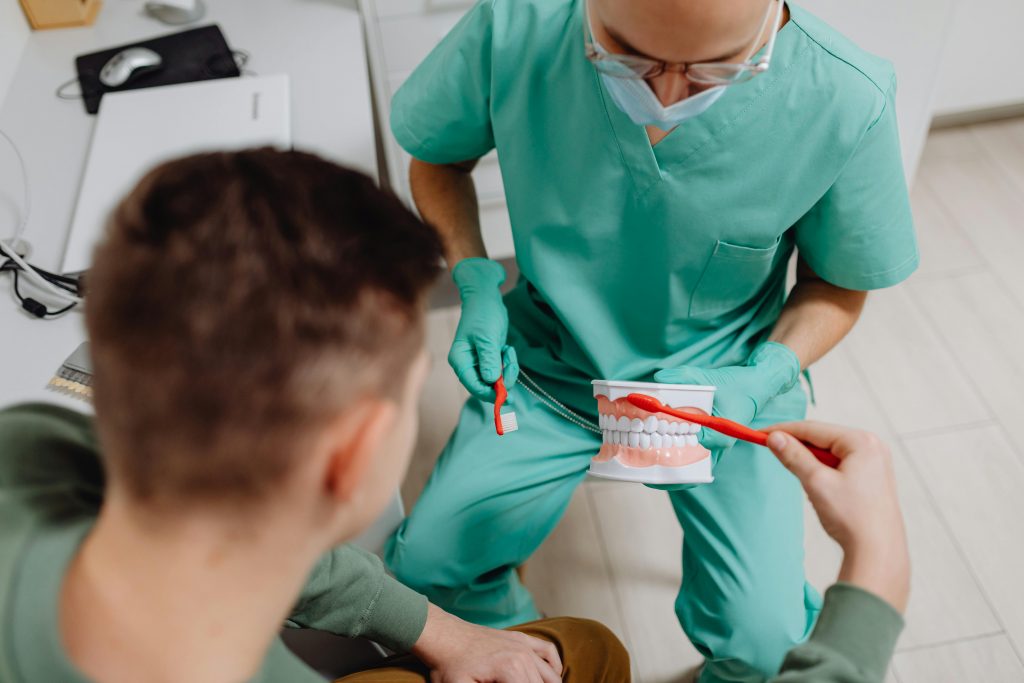
The core elements of a good routine
Flossing or using interdental brushes removes plaque and food particles from areas a toothbrush can’t reach. Skipping this step allows plaque to build up between teeth and along the gum line, which increases the risk of gum disease and cavities happening in-between the teeth.
An antibacterial or fluoride mouthwash can provide extra protection, but it’s not a substitute for brushing and flossing. It’s best used as an addition to, and not a replacement for, the basics.
Preventing common problems
Tooth decay (cavities)
Cavities form when bacteria in plaque produce acids that wear down enamel. Regular brushing with fluoride toothpaste and reducing sugary snacks/ drinks are key to prevention.
Gum disease
Early gum disease (gingivitis) causes red, swollen, or bleeding gums. If untreated, it can progress to periodontitis, which can damage the tissues and bone that support teeth. This can lead to the loss of teeth. Daily plaque removal and regular dental check-ups are the most effective defences.
Bad breath
Persistent bad breath often comes from bacteria on the tongue, gums, and between teeth. Brushing your tongue gently and cleaning between teeth can significantly reduce odour.
Sugars
The frequency of sugar intake and the role of diet plays a major role. Look out for a subsequent blog on the importance of a low-sugar diet.
Regular dental visits
Even with excellent home care, professional dental check-ups are important. Dentists and hygienists can remove hardened plaque (tartar) that can’t be removed with brushing alone. They also check for early signs of cavities, gum disease, oral cancer, and other issues that may not cause pain right away.
Most people benefit from a hygiene visit every six months, and a check-up as directed by a dentist. However, some may need more frequent visits depending on their risk factors.
Key takeaway:
Good oral hygiene is a long-term investment. A few minutes each day can prevent discomfort, reduce dental costs, and support overall health for years to come.